
|
| The new Point and Frame logo. |
Saturday, August 25, 2012
Point and Frame Has Moved!

Wednesday, March 30, 2011
Avocado

 |
| Bell Pepper #30, Edward Weston |
Still, I like working on this series. It provides a nice controlled method of practicing, without the time constraints or lack of repeatability when shooting "in the wild." And if I don't like this image, well, we just may have to eat guacamole again next week. Such a shame.
Monday, March 28, 2011

Tuesday, October 05, 2010

Sunday, May 18, 2008
Divided
Those of you who know me well may understand the significance of this image.

Peter, the father, the rock
turned to sand falling
slipping through fingers
dividing
what was one is now many
Thursday, April 17, 2008
Jeff Gee

This is a photo of my good friend Jefferson Gee. He was my roommate freshman year, and we've managed to keep in touch since then, though we don't see each other as often as we'd like. Each time we do, it seems like an endless stream of good conversation. He's just one of those guys you click with, you know?
Well one place we did get to see each other was in Europe. Last summer, while I was in Oxford, Jeff was studying all summer at the Georgia Tech campus in France ("GT Lorraine"). We decided to take one weekend and meet up--in Switzerland. We thought it was wild that two kids, one from New Jersey and one from Alabama, could go to school together in Georgia, and then manage to meet up in Zürich. Fun times.
While we were bumming around Zürich, he would ask me questions about my camera gear and photography. I took this photo to demonstrate the difference between a wide-angle, close up shot and a shot with a long lens from further away (which quickly followed). I wanted to show him why the long lenses are preferred for portraits, but I ended up liking this photograph better. Sure, the telephoto shot captured his features more accurately, but I feel like this one better captures his personality: fun to be around, a little goofy at times.
See, the significance here is that you won't find a "HowTo" article on the Internet telling you to take portraits with wide lenses, and rarely will you find that advice in books. All the "rules" say portraits should be taken with long to normal-perspective lenses. And, if I had just been taking the shot without trying to demonstrate anything, I probably would have put on a 80 or 100 mm lens, backed up and composed, and captured his features well. But because I was prompted by Jeff to experiment--even though I already knew what the result would be technically--I discovered a new result aesthetically. It seems I need to be asking myself the question, "Well what would happen if ...?" a bit more.
Wednesday, March 05, 2008
Industry

Finally got around to taking another pic for the GT Photo Club. This week's theme was "Industry." I took a picture of some scaffolding at a construction site close to the house. I had to set up the tripod (love the new tripod) on a small strip of land right next to an Atlanta highway. Exciting photographic danger.
Friday, February 22, 2008
MSE Magic

I recently had the opportunity to photograph the Materials Science and Engineering booth at Georgia Tech's Engineers Week fair. MSE was demonstrating several interesting properties of materials, including the low thermal conductivity of a space shuttle heat-shield tile, a methanol powered fuel cell, and the extreme expansion of nitrogen as it boils. In the photograph shown here, a superconductor is cooled with liquid nitrogen to below its critical temperature (the temperature below which it superconducts). When that happens, it generates a magnetic field stronger than gravity. Put a magnet on top and what do you get? Levitation.
Tuesday, January 22, 2008
Flickr and the Library of Congress

Flickr, the photosharing site, has teamed up with the Library of Congress, the keepers of thousands of historic photos, in order to put the power of Web 2.0 and user-generated content to good use. Flickr will host over three thousand of the Library's images (the program is still in the pilot stage) and invite Flickr members to tag or comment on photos such as the one above. In this way, the photos become more public for people like us, and the Library can harness the collective knowledge of the public to enhance their metadata for the images, improving the quality of the collection. It always interests me when I see things like this: new technologies enabling ordinary people to collectively have a greater impact than ever before.
Here are the Library's thoughts before and 24 hours after the pilot program started.
Here are Flickr's thoughts before and 24 hours after the program started.
Here's the Flickr site: The Commons.
Thursday, January 17, 2008
It's Snowing!

Atlanta snow--who would have guessed? It didn't stick though, unfortunately. One of my roommates did make a lovely little snowman outside our door.
Monday, January 14, 2008
Broken

This photo was taken for an assignment for the GT Photo Club. The theme for the week was "Broken," so we were supposed to take a picture that somehow embodied that theme. I had been walking past this broken glass on my way to and from class several times a day all week, and finally found the time to go out and shoot it. The next day, someone had cleaned up the glass and it was gone. Goes to show you shouldn't wait to shoot something you're interested in--it's all only temporary.
The picture was conceived, pre-visualized, shot, and processed within about an hour and half. This is a markedly different approach than my other pictures, some of which I've been working on for months. I think there are some virtues in this fast-paced approach, at least some of the time. A raw or half-processed photograph sitting on a hard drive is useless--something has to get produced, even if it is a bit rough around the edges.
I just discovered the GT Photo Club a few weeks ago, and joined it for exactly this kind of thing. If I let it, it will give me a sense of obligation to pick up my camera and take pictures. Knowing me, I will quickly let my schoolwork overtake me, and not make time for photography, which should probably be as high a priority as coursework, if only for my own sanity. It looks like school already gets in the way, though; I found out this morning that I will have to miss the next two Photo Club meetings due to some extra stuff I have to do for a certain class. C'est la vie.
Wednesday, November 14, 2007
iPhotoshop

Well, the transition is complete.
I've moved all my photographic "stuff" (and most everything else, too) from my Linux-based laptop to my new iMac. After reading The DAM Book, I was able to implement a system of tagging, cataloging, and archiving that will grow with my photograph collection; this mess I've had to go through of re-tagging and organizing all my photos should never happen again. The system is also set up for painless and frequent backups, which is something I've been meaning to implement for a while.
Fancy folder organization, exhaustive tagging, and expensive software don't mean a thing without photographic vision. Last week April and I saw an exhibition of the work of Harry Callahan in Atlanta. His work was remarkable, showing his mastery over line, shape, and tone. April pointed out two adjacent images obviously taken within minutes of each other. One, she noted, had a harsh, cold feel to it; light and dark had been pushed to such extremes that most detail was lost--all that was left was the white shape of his wife's body against a completely black background. The other was much more sensuous. Light seemed to wrap around her body, revealing nuanced detail in her skin. I told her that the difference in the photographs was not made by the camera--likely the two images were made with the exact same exposure. Rather, the vision was fulfilled in the darkroom, with the use of contrast filters and other light adjustment techniques such as dodging and burning.
I was recently asked by someone how the digital age and Adobe Photoshop was changing photography, and whether photography has become "more about Photoshop" and less about accomplishing things in-camera. I think such a question stems from two main factors: first, that yes, digital imaging has changed the photographic landscape in significant ways. Emails containing "photoshopped" images of bizarre or surreal scenes spread like wildfire through cyberspace, clouding people's idea of what Photoshop actually does for us. It's not just about composites, people. And when it is used for composites, it doesn't have to be about distorting reality. In my last post I showed a composite photograph that makes no attempt to be anything else. Photoshop allowed me to present those two images as a set, much like I would present them if they were printed and hanging on a wall. Though I could have done this in a traditional darkroom, it would not have been nearly as quick or precise.
The second main factor contributing to such questions is a lack of understanding of the kind of power the darkroom gave film photographers over their images. Photography has never stopped when the shutter closes; the real magic happens in the printing process. The darkroom, whether chemical or digital, gives us control over tonal values; essentially we decide whether to make parts of an image lighter or darker. That really is the essence of all darkroom work. The trick is knowing what needs its value changed, and then what that value should be. That decision is unchanged from chemical to digital darkroom. Where the digital darkroom excels is in giving the photographer real-time feedback on what his choices are doing to the image, with every step being completely editable and reversible. In a chemical darkroom, such steps are done on a "latent" image--which means you are staring at a white piece of paper until you actually develop it. If you don't like one of your steps, you have to do it all over again, which can be quite frustrating. So a digital darkroom like Photoshop gives us all the control film photographers have, but perhaps more nuanced, and also removes much of the frustration and uncertainty of working with a latent image, freeing us to work more creatively--not to mention it keeps us all from smelling like fixer all day. Great.
But, as I said before, Photoshop can't give you vision. Take the image posted here, for example. When I first started working on it, I wasn't sure where I wanted to take it. That's called lack of photographic vision, which is something I'm working on. After playing around with it for a while, I realized I wanted to take a lot of the color out and warm it up, leaving me with a yellowed desaturated look. I did some dodging and burning on the boats in the foreground and the buildings in the background, giving them more shape and bringing out details that otherwise were lost. I actually ended up mostly pleased with this image, though I'm sure it could be made much better in the hands of someone more skilled. What worries me is that I had to "play around" with the image before I realized where I wanted to go with it. Though I think that's ok for now, I eventually want to get to the point where I can look at a raw image and know exactly what I want to do with it; or better yet, know it before I even press the shutter. But for now, I am still learning the techniques, the possibilities, and the limitations.
Tuesday, November 13, 2007
Criticism

Wow. My mother recently saw this composite photo of my girlfriend April and myself. She said it was OK, but she would prefer it if I cropped out more of the space in in the center, bringing the two faces closer together. Certainly not the harshest of criticisms, but how difficult it was to hear! She's given me the same sort of casual suggestions before, and each time I have the same reaction: as she speaks I feel myself start to tense up, preparing for the blow and for my defense. I then start racking my brain, searching for some scrap of advice I had read somewhere that will justify my own take on the subject, thus proving her "wrong." She is not convinced. She then realizes I am not taking it well and not agreeing, then walks away muttering something like, "But I don't know anything about photography anyways." I am left discouraged.
This is not the proper reaction to have when being criticized. What kills me is that hers are such slight criticisms; as I continue with this effort I will certainly be critiqued harsher and more often--I better be ready with a good attitude and open ears. I think part of the problem with my reaction is that the critique is coming from someone so close to me; perhaps a stranger's words will not sting quite so much. But I think another, larger, part is my own poor response--no excuses. I am not used to being criticized at school or work, and my photography hasn't been seen by enough eyes to be seriously criticized either. So I am still learning how to cope with it and respond more positively. So please, anyone out there reading, criticize my photos! I need all the help I can get.
On a more positive note, tonight April told me a wonderful thing. She said that, since I've started pursuing photography, she's been exposed to the more artistic side of photographs, instead of the purely documentary images that fill every family's photo albums. This, in turn, has forced her to see her own world in a new way, arranging the figures in her landscape into some more aesthetic organization. This, of course, is exactly what photography asks us to do. I believe this was for her, as it was for me, an introduction to visual literacy, something most people our age are hopelessly deficient in. It's exciting that my interests, even if not my photographs, are having an impact on someone else, and that perhaps she and I could explore this subject of visual literacy together.
Sunday, September 23, 2007
Post Processing

I haven't taken a serious photograph since I returned from Europe on August 5.
But I'm okay with that.
When I came back, I had a large catalog of images that needed to be processed. In addition to all the images from the cities discussed in previous entries of Point and Frame, I had photographs from all the places I visited after I arrived in Oxford: London, Edinburgh, Zurich, Rome, Dublin, and Oxford itself. While stationed in Oxford, I spent my free time studying for classes and planning these weekend trips (they were not part of the larger study abroad group and were planned by myself and friends), with the understanding that my photographs would be processed when I arrived home.
Well, I got home and set out to pare down the catalog to the images I wanted to focus on, then opening them to convert the raw file and do my tonal corrections. I quickly realized how little I knew about digital post-processing. I had discussed this in an earlier entry, but I thought I had made some progress since then; it turns out not much. After churning out a few images like this one, I knew I needed help. So I consulted the podosphere, as I normally do, and found a wonderful podcast called Photo Walkthrough, produced by a man named John Arnold from the UK. His podcast is a series of video tutorials taking the viewer through the post production steps on a photograph, often spending a few weeks' worth of lessons on a single image. The lessons don't just focus on editing technique, which so many tutorials do, but rather they attempt to convey the why's of editing, which means I don't just learn how to do the technique, but when I should--much more valuable in my opinion. My eyes were opened again to the wonders of post-exposure processing, similar to the revelation I had during my short course on darkroom technique. The impact that a little dodging, burning, or contrast filtering can have on a photograph can be breathtaking when done right, and the superior control offered by a digital darkroom got me excited once again about the possibilities available. There's just one big problem: John Arnold, along with all other serious digital photographers, uses Adobe Photoshop.
Now anyone who knows me knows I am a staunch open-source software proponent. I'm currently typing this entry on a laptop running Ubuntu Linux as the operating system, and have done all my image cataloging with a great application called Digikam and image editing with the GIMP (an acronym for GNU Image Manipulation Program). All this software is open-source, meaning the code used to write it is available for modification or redistribution; free as in freedom, meaning there are no license agreements forcing you to only install on one machine, etc; and free as in free beer, meaning it costs no money at all to download and install any of these applications. These three characteristics, especially the last two, were enough to convince me to switch to a completely open platform, with no proprietary software (including Microsoft Windows) installed on my machine.
In order to follow the tutorials given at Photo Walkthrough and elsewhere on the internet or in books, I had to translate instructions for Photoshop into instructions for GIMP. Sometimes this was trivial, other times it was impossible. Basic tenants in Photoshop such as high bit depth for adjustment flexibility and adjustment layers for non-destructive editing were simply absent from the GIMP. As I delved deeper, I realized just how far the gap was between the two programs, and just how superior and more intuitive Adobe's application was. I found myself spending hours in GIMP attempting to do something I knew would take minutes in Photoshop. It frustrated me so much that I took the plunge: I gathered some money I had received from some relatives and purchased a 20-inch Apple iMac (2.4GHz Intel Dual Core, 2GB RAM, 750GB HDD), along with Adobe Photoshop Creative Suite 3.
As much as I lament the loss of Linux as my main computing platform--and it's not going anywhere, I still plan to run Ubuntu on my laptop--I do not regret my decision. Though the computer geek in me advocates using open-source software, the engineer in me always advocates using the right tool for the job. The artist in me tells me the right tool for my work is the Macintosh platform with Adobe Photoshop. I still maintain that for the vast majority of computer users with general needs (internet, email, documents, spreadsheets--even music management, image management, and image editing), open-source software more than suffices. But for specific needs such as those of serious digital photographers, the superior tools offered by Photoshop along with the iMac's full printer driver support and calibration abilities on the Cinema Display unfortunately make this the best solution. The iMac came in a few days ago and Photoshop shipped yesterday.
In the meantime, I've pretty much taken a break from photography. I figured it would be a waste of effort to work on these pictures before Photoshop arrives, so I haven't. I've realized that my love for photography has reached a much more sustainable level. At first, as in any blooming love, there was a feverish romantic flame, where I devoured anything about the subject I could get my hands on: from a philosophical discussion to gear reviews to tutorials to simply analyzing photographs. I was worried that, when the initial flame wore off, so would my interest altogether. But, after being saturated with shooting in Europe and still not being bored with it, I realized that my interest was staying for the long haul. I have the rest of my life to work on this subject, to read the tutorials and text books and practice composition, exposure, and post-processing. There's no rush. This is both a liberating and comforting realization. I know that, though I haven't taken a serious photograph in over a month, that's okay; it hasn't gone anywhere.
Saturday, June 23, 2007
En Route to Oxford

We just finished the touring portion of the trip and are on our way to Oxford, England for the remainder of the summer. We took our final exams yesterday (we take new courses once we get to England), and then some of us rented bikes and rode up to the North Sea. It was a lot of fun, even though it was raining. We ate lunch by the beach, then rode back. Last night I ate traditional Brugge mussels, had a waffle with whipped cream and chocolate sauce, and drank one too many local Belgian beers. It was great.
Brugge is a charming little town, an absolute gem among the European cities I've seen so far. The facades on the short little buildings were wonderful; combined with the cobblestone streets, the winding canals and bridges, and the local residents all on bikes, Brugge is a beautiful city. They are very proud of the their chocolate, their lace, and their fried potatoes (they were invented in Belgium, not France!), and you can find these in little shops and restaurants all over the city.
I did not take a single photograph in Brugge, despite its beauty. I think this may have been due to several factors. First, I wasn't there for very long. We stayed just two full days, the first of which I spent most of my time in my room studying for the exams, the second day was spent on a bike, in the rain (during which I was worried sick the whole time about my camera getting wet). That's fine; I don't regret. Brugge will just remain a little nugget of European beauty unphotographed.
Instead I'm posting here a picture from the island of Burano, just outside of Venice, Italy. This is the island I spoke of earlier, where the colors of the buildings are just overwhelming. I'm not sure I quite captured that here--the yellow looks a little dull--but that was my goal.
Tuesday, June 19, 2007
En Route to Brugge

We're now on our way from Berlin to Brugge, Belgium, with an overnight stop in Bielefeld, Germany. Berlin was an interesting city, saturated with history from WWII and the Cold War. I think it's safe to say no other city in the world still feels the presence of the Nazi's reign or the Soviet occupation like Berlin. Everywhere you turn there is some military or holocaust memorial, a hill made of rubble from WWII bombing, or some sign of the Berlin wall and the division and struggle that went along with it. The city is is more significant to Americans than any other city I've visited; of the four most significant events in recent American history--WWII, the Vietnam War, the Cold War, and the War in Iraq--Berlin played a major role in half of them. We spent a few hours at the museum at Checkpoint Charlie, reading the descriptions of events and pictures centered around the Berlin Wall and its one passageway. The extreme measures people took to cross this wall are quite moving, as are the psychological struggle of the Soviet border guards, many of whom did not want to be there are and intentionally shot over fugitives' heads. It's hard to think that it has come down less than twenty years ago, within my lifetime.
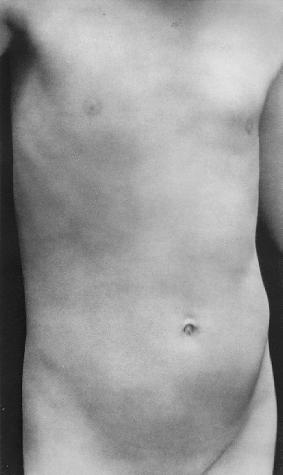
We spent some time in the Pergamon Museum, where I saw many great works of art, including the Temple of Zeus at Pergamon and the Ishtar Gates of Babylon, both of which were incredible. But the most striking work I saw was a statue, sculpted in stone, of a man I later discovered to be Apollo. There was nothing terribly remarkable about it--I've seen many male nudes on this trip--except for that all that was left of the original was the the torso: from just below the neck to the upper legs, no arms. The "cropped" subject and the contrapposto of his stance was strongly reminiscent of an Edward Weston photograph of the nude torso of his son. This is one of his most famous photographs, but the fist time I saw it I didn't know quite what to think. The boy is young and slender; the photograph is certainly not a celebration of man's strength or brawniness. Yet the photograph is still beautiful--a presentaion of the human form and stance with those wonderful slender dark shapes on each side. As I stared at the statue, which was absolutely a display of the strength of the perfect male form, thinking of all this, I was able to better put Weston's effort into historical context, giving me a much greater appreciation for the image. Weston, certainly, has thoroughly studied these ancient Greek and Roman forms (and all art since), and has internalized them to the point where they are second nature. He was able to stand in front of his nude son and frame exactly what he wanted, knowing full well (even though I didn't when I saw it) the reference he was making to Greek sculpture. The difference, though--and this is the wonderful thing about photography--is that this is no glorified human or god, and no figment of his imagination. This is a real person, his own flesh, really, with real human weakness. He was taking ancient sculpture and turning it around on itself, showing us not a beautiful woman or powerful god, but a weak adolescent, a subject we all know too well, for we all have been one. Michelangelo often scultped the hands of his subjects oversized (see his David), a reference to the idea that it is not he but God who is working through his hands. Weston comes back with this sort of surrogate self portrait and says no, I am not God, I am man, and this is my flesh. It's all very interesting.
Berlin was probably my most photographically successful city yet. I tried hard to stick with point, line, shape, form, pattern, texture, and color, and I think it paid off. At my current state of evaluation, I count seven keepers from just two days of shooting, including this one of the holocaust memorial. The graphic elements are obvious, and I had the sense to include a person on a thirds line to give it some scale. These blocks are arranged in ordered rows, and by choosing to arrange them on the diagonal the image gets a great sense of dynamism and motion, which is perfect because of how this art works: it is not something you look at, but something you move through. I really enjoyed this memorial. These cement blocks spread out in their rows for probaby close to half a city block. At the edges, they are no more than a few inches high. As you walk towards the center, zig-zagging through them in an attempt to get lost, the blocks get taller and the ground gets lower. All of it has an uneasy, imperfect feel to it--the ground is not flat nor inclined but rather is a series of unordered waves, and the blocks do not have perfectly vertical sides, nor do their tops line up evenly. At their tallest, we estimated them to be around 14 to 16 feet high. Once you move through the middle part and start coming out, the blocks get shorter again, more light gets let in, and finally you are at the edge where the blocks are barely above ground level. Moving through it is clear how relevent it is for a holocaust memorial. The victims of the holocaust were taken from their normal lives and thrown into the depths of some hell, organized but chaotic, surrounded by inpenetrable stone. Some of them survived, moving through the hell back into light. I don't think I've ever seen a work of art this abstract and this clear about its message. I was evesdropping on a tour guide who was explaining that the artist, a Jewish American, said there is no significance to the number or shapes of blocks (they don't represent tombstones or number of people that died, for example), they are purely abstract elements to convey the emotion. Apparently the artist came to visit it a while ago, and was moved by seeing very diffent reactions to his work: some people were weeping, leaving flowers by the blocks, while a little further down children were running through them, playing games.
The travel portion of this trip is pretty much over. We will spend two days in Brugge, most of which will be spent studying for our final exams, before heading to Oxford on Saturday, the 23rd. We'll stay there until about the first week in August, then I fly home. Although I've enjoyed the traveling, it will be good to get some stability back in my schedule. I plan to take some trips on the weekends (we get three day weekends every week), but I also want to explore Oxford thoroughly.
I miss my girlfriend.
Friday, June 15, 2007
En Route to Berlin

We're now on the bus, four hours away from Berlin. Prague was an interesting city, a world apart from more western cities like Paris and Vienna. The Soviet influence is still strong here; you can see it in the faces of the people. The older generation in Prague looks hardened with chiseled faces, as if they've drowned years of hardship with beer and vodka. Their dark wrinkles tell the story of the struggle for freedom. The younger generation, though, show a vibrancy not yet touched by that struggle. The women here are beautiful, wearing flirty skirts and low-cut blouses as they strut down the street in pairs. Are they the first generation to escape the hard life, or are they just starting down that path? Time will tell.
A generation before the Soviet rule there was Nazi influence. Wednesday we went to a former concentration camp in a town called Terezin, about an hour outside of Prague. Terezin started out as a sort of military base in the Austro-Hungarian empire, later held POWs and other military and political prisoners, and in the forties under Nazi rule it held many Jews and others of an "inferior race." The whole place was quite eerie. We saw the places where these prisoners slept, ate, were executed, and were cremated. The photo here looks into one of the eating halls, and if I remember right it also doubled as and overflow bunker. It was like a sort of ghost town; it was empty with cobwebs everywhere, and this sort of musk pervaded every room. I felt uneasy the whole time.
Photographically, Prague was yet another failure. I took pictures of the city, but my pictures cannot speak for the city. I tried to get up this morning and shoot from the famous Charles's bridge before dawn (the sun rises at 4:50 a.m. in Prague), but completely overslept. My suspicions before I left for Europe have pretty much been confirmed: that I am photographically not ready for an opportunity like this trip. I feel like I'm trying to sit in with Thelonius Monk when I know my scales and a little theory, but I can't really say anything with my horn yet; I can't put it all together and construct a successful solo. That's not to say I'll give up trying, but there's only Berlin and a short stay in Brugge left for the traveling portion on this trip, and I don't see anything short of a miracle that will allow my skill and photographic eye to improve enough to make those cities successful.
As I read through what I just wrote, it sounds awfully depressing, but I want to make it clear that I am not going around sulking about my boring pictures, and that I most certainly am having a great time on this trip. One thing I believe I have been successful with is separating my photographic pursuits with my enjoyment of Europe. The whole experience has been no less than amazing. The people I'm with are great, and the places I've seen are breathtaking. Last night we went to see Mozart's Don Giovanni in a beautiful opera house (we had good seats!) in the city where it premiered in the 18th century. Afterwards we ate ice cream on a bench in the main city square and just watched people go by on a busy night. That kind of experience is priceless, and I honestly don't care that I don't have a photograph of it.
However, my work is cut out for me when I get back home. I now feel very comfortable with the controls and limitations of my camera, and should be able to focus exclusively on the creative process at home, in locations I am familiar with. By the next time I'm in a special place like this, I should be able to instantly recognize the graphic elements of point, line, shape, form, pattern, texture, and color, and make effective use of the photographic elements like depth of field, motion blur, point of view, and perspective/lens choice. I cannot photographically "waste" another opportunity like this (although I doubt another quite like this will ever arise).
You know, come to think of it, this is a good thing for me photographically, even though I don't consider it a success. Under what other circumstance would I be practically forced to a) Take many photographs everyday, and b) Constantly evaluate the success of those images and my progress as a photographer? I can think of none. If were taking classes in Atlanta right now I'd be lucky if my camera came out of the bag once a week. There has been definite progress in my both my skill as a photographer and my ability to evaluate myself, though that may not be obvious in the images. In that sense, the trip is a photographic success, even if there are few successful images.
OK, I've rambled long enough, and I'm running out of battery on my laptop. Wilkommen in Deutschland!
Monday, June 11, 2007
En Route to Praha

On the bus again; we just crossed the Austria-Czech border. They checked our passports, and took three of ours in for further evaluation (an Indian, Kenyan, and Chinese passport). Former Soviet Union, here we come.
Vienna was a very cool city, the most modern yet. Although it was probably no bigger than Paris, it felt more expansive, with larger, newer buildings and wide streets. I got my share of sausage, wienerschnizel, and Austrian beer. I liked that city.
Photographically, I don't think I have any real keepers (though I haven't spent much time evaluating). I felt very frustrated the whole time. I was here in this cool city but couldn't really "capture" it, whatever that means. Part of the problem was that we didn't actually stay in the city (we were in a similar situation in Venice). Although the food at the hotel was great (it was connected to the Vienna airport), it was a 30 min/1.70 euro train ride just to get into the city, and another U-Bahn ride to get anywhere once inside. With lectures everyday at 8:00 in the morning, there was no way to go out shooting in the morning before dawn and make it back in time. That's by far the best time to shoot: amazing light and no tourists. After an 8:00 lecture and a 10:00 museum, that put my first batch of free time right at noon, the absolute worst time of day to take pictures. So I didn't. In the evenings the light was better, but the whole place is still tourist-laden, and it's much harder to separate from the group. I took pictures, but they are mostly uninteresting.
So that's one excuse, outside my control, for the bad pictures. The second reason is completely within my control. I feel like I have no driving force for photography, as if I'm just shooting what "looks cool" as opposed to having a definite purpose or statement. I've said in previous posts that I want to take more portraits, and that still stands, but I want something else, something that can show "Vienna" (or "Prague" or "Berlin") interestingly--something pleasant to look at, something worth exploring visually. Anyone can (and I certainly do) take pictures of a random city street in Vienna, but what makes that Cartier-Bresson image of a Parisian street special, more visually interesting? In trying to figure it out, I realized where I've lost focus--the very basics, the whole point and title of this blog: Point and Frame. That is to say, graphics: point, line, shape, form, pattern, texture, color. Forget color and shoot in black and white, and I'm left with six graphic elements to exploit in every photograph. No more random shots. I've been using the camera every day, and am now much more comfortable getting an accurate exposure with little effort. I understand my dynamic range capabilities much more, and as a result am worrying less and less about getting the photograph technically "right." This leaves room for me to explore the photograph more creatively, exploring those graphic elements. I should exploit this new freedom as much as possible. There are graphic elements everywhere, and it is left to me to edit out that which does not contribute. If I can let that be my focus within these foreign cities hopefully my photographs will both document the space and be interesting to look at. That's all I really want, now that I think about it. Interesting documentation.
This picture was taken just inside the doorway of some theater as we tried to escape the rain on our way to an orchestra performance of Mozart, Brahms, and Ravel (which was excellent, by the way). Umbrellas have always fascinated me, these little domes people carry around with them for shelter; a street full of people in the rain looks like a pile of marbles or something. I've always wanted to photograph them, but they present an extra challenge because digital cameras and rain don't get along too well. Although I think the composition here is quite distracting, not very balanced, and in general could be much better, I do like the repetition in the dome of the church and the dome of the lady. That may be something to look into for future projects.
Onward to Prague, where I'll be able to pronounce nothing and I'll have no idea what anything costs (I think it's 20 crowns to the dollar?). My focus should be point, line, shape, form, pattern, texture, color. And portraits.
Thursday, June 07, 2007
En Route to Wien

I'm writing this post from a hotel in Klagenfurt, Austria, where we are staying for the night as we make our way from Venice to Vienna. Venice was a town certainly unlike any other on earth--a city that by all logic shouldn't even exist, yet has flourished as a center of culture and art for hundreds of years. A port city, you can find architectural influences from the east and the Byzantine empire, as well as the Romanesce influences found throughout Italy. We stayed at a smaller city named Padua (Padova), about a half hour's train ride outside Venice. The first time I walked out of the Venician train station and down the steps, it was like stepping into a whole new world. It feels like you are standing at the edge of a street, yet there is no street, only water. And there are no cars, only boats. No crosswalks, but bridges. It is unreal. I watched a construction crew operate heavy machinery from their boat. I watched a postman zip down the canal in his motorboat. I watched a blue police boat speed by with sirens blaring. Although interesting to watch it was almost unsettling how foreign it all was. In addition, the city is an absolute maze to get around in--nearly impossible to navigate. I wished we had spent a little more time there to get a better feel for the place.
On our last day in Venice we went to the glass-making island of Murano and the lace-making island of Burano. Murano was nice; the glass there was absolutely beautiful (though quite expensive for the larger stuff) and we got to see a demonstration of the glass blowing, which was interesting. Burano, though, was a photographer's dream. Every building on that small island was painted a deep, saturated, solid color. A bright red house next to a deep blue house with red flowers in the middle, next to a dark green store with yellow shutters on the windows. It was wonderful. By the time this gets posted, some pictures of Burano will hopefully be on my Flickr page. The picture I'm posting here was taken in San Marco Square, the social hub of all Venice. With the San Marco Cathedral in the background and Doge's Palace to the left, the square is constantly full of people (Venicians and tourists alike), and there are usually at least two pigeons for every human out there. If you have any bread or seed they will surround you and eat directly from your hand. This young boy was having a great time with the birds; I snapped off a few frames, and was satisfied with this one.
As I said in the last post, I wanted to take more portraits. In Venice, I was able to get some shots of a street clown (who posed quite dramatically for me when I asked if I could take his portrait), a street musician, a lace maker on Burano, and waitress/owner of a wonderful restaurant I ate at on my last night (I had spaghetti with clams, cuttlefish in ink with polenta, fried potatoes, and red wine). I haven't look real hard a post-processing them yet, but I have a feeling none were terribly successful. Still, I know that's what I'd like to do more of; it would take my summer portfolio to an entirely new level.
Tomorrow we head into Vienna, the home of Haydn, Mozart, and Beethoven. I hope to get my fill of sausage, beer, and classical music.
Thursday, May 31, 2007
Prego

Well we're a few days into Florence now, and the longer I stay here the more I like the city. It is not very big, but it's dense with tourists, local residents, street vendors, pizza, and most importantly, gelaterias. It has its own rhythm, completely different from that of Paris, and a world apart from anything in the States. You can wander in circles for hours, going back and forth across the bridges or making ever-widening circles around the Duomo, dodging the small cars and vespas as they tear through the tight streets, perusing the "fine" purses and art for sale on the sidewalks, and eating pizza at the base of a centuries-old building. That's exactly what we did this evening, after a morning of taking a long hard look at Michelangelo's David and Masaccio's work on the panels in the chapel of the Santa Maria del Carmine, some of the finest pieces of art in the world. Florence is rich in that kind of cultural history, and is very aware of it--sculptures can be found randomly on street corners or in front of buildings, and the city in general is proud of its museums and amazing churches.
Well, photographically, I have done better about taking the touristy shots. I feel good about it. I'm still not being as creative with the photographs as I'd like, but its getting better. I feel confident that I was right in thinking that simply pressing the shutter more is going to get me thinking more photographically. I have plenty of throw-aways, too, but some keepers I think. This isn't quite the same strategy as the "take a million shots and hopefully one of them will come out," which I strongly disagree with. I'm approaching it with more of a "pick the camera up, take some tourist shots to get you looking through the viewfinder, and maybe you'll start to see something more graphic." I think its working, and should only get better as I move forward, getting less self-conscious about laying on the floor to get a shot, or staying behind the group when there's good light.
I'm finishing this post on the bus as we make way to Venice. I'm excited that all the winding canals will make for some graphic images. There's one more thing I'd like to incorporate into my images: portraits. There were so many interesting people in Florence doing interesting things that I'd love to photograph, but I never got the courage to ask them. I took some portraits of friends, which I'm satisfied with and hope to continue, but how great would it be to get portraits of street vendors, gelateria workers, couples on the street and Italian policemen? That would be a sure way to add something extra to the "touristy" shots, but it will take some courage and technical confidence--I can't be fiddling with my camera as I try to do this. Onward to Venice.
Subscribe to:
Posts (Atom)